

Blog
Given African print as a gift in Benin republic

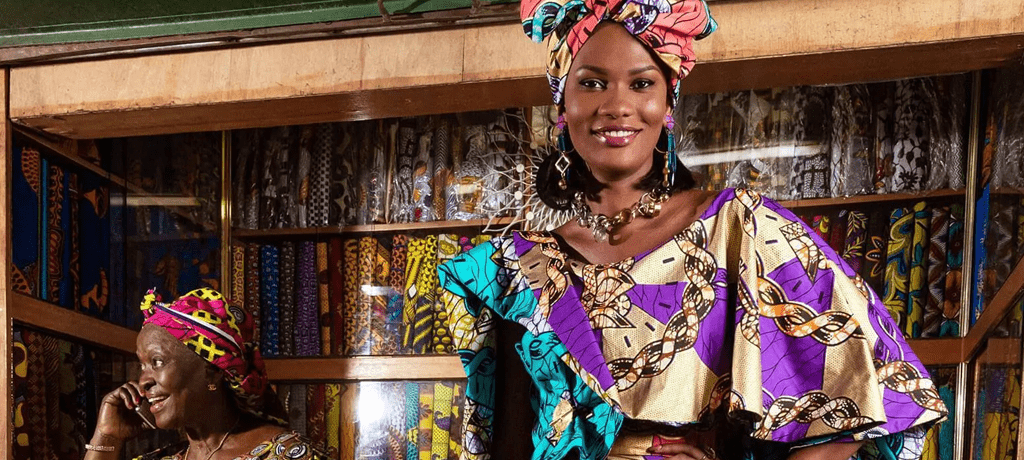
Fabric patterns have their own language, which many elderly individuals can read more fluently than letters. In Cotonou, Benin, I learned the fabric language. Over a hundred African print batik textiles with various meanings are available. For example, buying a piece of cloth with star-shaped flowers on it sends a message: “I want to be part of this family”.
Many textiles are seen on the streets without knowing what meanings they convey. I had noticed women going throughout town wearing pink, yellow, turquoise, and speckled African outfits. I’d seen moped-cooled girls with printed flowers, horses, and even umbrellas and handbags on their waist and chest-wrapped materials. According to a handbook, a specific horse fabric is about speed. The cloth suggests she is a good cook. What he has learned is revealed by the letters. When a lady dresses in a shell-like circle, she is expressing her preference for younger males.
I exhaled with satisfaction that I hadn’t yet purchased African textiles. Maybe I could have informed you that “attention, attention, I’m still single”, or “I have a fantastic bottom”. A pattern-filled African fabric shop in the hamlet of Benin. However, not everything can be found: for example, looking for the fabric of a magnificent butt is pointless. The messages are mostly amusing. Known for their African gowns, the business has a variety of textiles that highlight the riches and joyful wind. That’s a lot of fun to tote around, especially during gatherings.
A wife’s fabric selections can communicate with her spouse in a variety of ways. Three feathers signify that only two close friends can be present at the same time; a third is too much. “Let’s decide on our family issues without involving the others.” Young lovers express their feelings for their loved ones by wearing cloth with two birds flying out of a cage. If the pattern only appears on the woman, it sends a message to the guy that “if you visit, I will.”
“Dogs Bark, Caravan Goes” is one of our favorite textiles. It indicates “I know you’re talking about me negatively, but I don’t care.” Crustal designs may be found on the cloth. That is the type of cloth I can purchase. The wording is heartfelt, and the fabric is lovely. THE FABRIC IS THICK, AT LEAST IN THIS WARM WEATHER, yet the locals are comfortable. The fabric is cotton, and the surface has a waxy hardness. The surface softens when used.
African pattern batik textiles, also known as wax fabrics, have a long history in Africa, dating back to the late 1800s. The Dutch and British developed a method for producing machine-cheap imitations of Javanese hand-made batik. The plan was to offer the product to the existing Indonesian market. There are several ideas as to how European textiles came up in West Africa. One source claims that fabric ships paused at West African ports on their way to Asia, and the consumer base grew organically. Another claim is that Europeans marketed textiles to Africa while they were unsuitable in Indonesia.
African cloth names arose in the hands of African vendors. Europeans, who were frequently influenced by Asia, had to devise a tale that would appeal to the natives. A message can sometimes be extracted from a pattern, but not always. You just must be aware. Many Beninese can interpret fabric patterns, which constitute a kind of communication.
Later, wax textiles were created in Africa, although the majority of this manufacturing was controlled by Europeans. Production has now transferred to China and China to a considerable extent. The quality of Chinese textiles is substandard, as are many patterned African fabrics, which are not wax cloths but rather cheap artificial fibres. The highly regarded Dutch Vlisco, which manufactures Rolls Royce wax textiles, costs roughly 10 euros per metre. Good textiles are expensive.
FABRICS are associated with life’s most significant twists and turns. It’s a bet request if a young guy presents a woman a cloth with hens and eggs on it. The bet is accepted if the woman wears the fabric. “Must be able to read the gift message.”
The same fabric is also used in the groom’s several duvets. By wearing it, the wife expresses her appreciation for family life – or that the hen, or woman, is the most essential member of the family. Young lovers can show their feelings for one another by dressing in this fabric.
African clothing with a design that had no meaning. Women adore African materials, although they are increasingly clothed in “simple fabric.” They are unable to explain why they have received less attention. Nowadays, especially young people, wear meaningless textiles just because they enjoy the design. Some people’s expertise of African textiles may have been overestimated. A short street ball demonstrates that many young individuals have lost sight of patterns. Everyone over the age of 40 understands the African fabric language, while most individuals under the age of thirty do not. Traditional customs are stronger in the village, although some urban educated young ladies embrace the old fabric culture to express their African ancestry. Colorful printing batik fabrics have been used in Africa since the nineteenth century.
FASHION AND CUSTOMS, ON THE OTHER HAND, ARE CHANGING. When we encountered a vendor in her business, she was dressed in a blue western blouse and an African garment with an unidentified design. Women adore African materials, although they are increasingly clothed in “simple fabric.” They are unable to explain why they have received less attention. Nowadays, especially young people, wear meaningless textiles just because they enjoy the design. Some people’s expertise of African textiles may have been overestimated. A short street ball demonstrates that many young individuals have lost sight of patterns. Everyone over the age of 40 understands the African fabric language, while most individuals under the age of thirty do not. Traditional customs are stronger in the village, although some urban educated young ladies embrace the old fabric culture to express their African ancestry. Colorful printing batik fabrics have been used in Africa since the nineteenth century.
“My spouse is capable,” if one were to wager on Benin’s most popular African design, would be a safe bet. The fabric’s name is derived from the pattern in the famous song about a capable spouse who “buys me what I like.” The shopkeeper’s outfit is created from such cloth by a magnificent seamstress. “I want to show everyone in the community that my husband is capable,” she adds. She’s not even married! The men will not disturb you since they believe she is preoccupied. For acquaintances, the fabric indicates that she is searching for a partner who can ensure financial security. Others are unconcerned.
As a result, the pattern language should consider the circumstance and remember to read between the lines. Fabric designs also have perplexing dialects, with varied meanings in several West African regions. Political campaigns also make advantage of the fibers. Candidates’ faces are printed on textiles in certain nations. Supporters become walkable election advertisements.
Fabrics are very essential, if not the most important, present in BENIN. Choosing presents is a precise process. When the wife visits her parents, they carefully examine the outfits. How is your daughter’s marriage progressing? Fabrics are still essential, if not the most important, present in Benin.
In Benin, males wear significant materials less frequently than women. Today, the priest appears dressed in a suit and asks, “Can I come for you strangers?” “I’m sure I’ll be warmly greeted if I go to an unfamiliar area wearing this apparel.”


